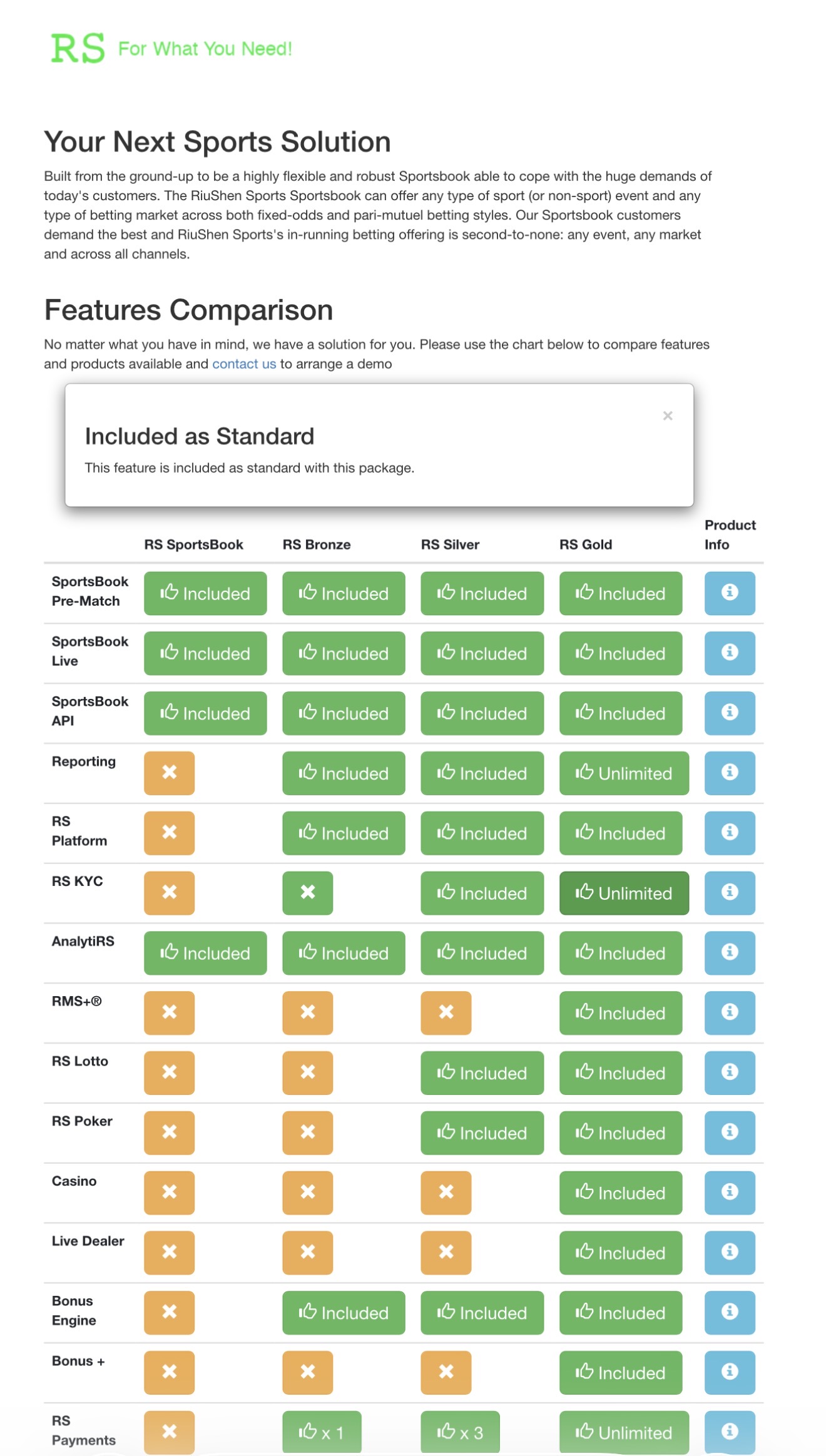
Back in October 2020 when I was at Champion Tech, I put together a quick proof of concept to try to show my boss some stuff – an alternate branding with an idea of “levels” of sports platform features.
That’s it. The idea didn’t fly, which was a pity, I kinda liked it and thought it had legs.
Screenshot
It was a proof of concept.
It was two static html pages – html and basic jquery – In retrospect I should have added some server side stuff, maybe if I did it again I would.
It probably took me around 20 minutes to do it overall.
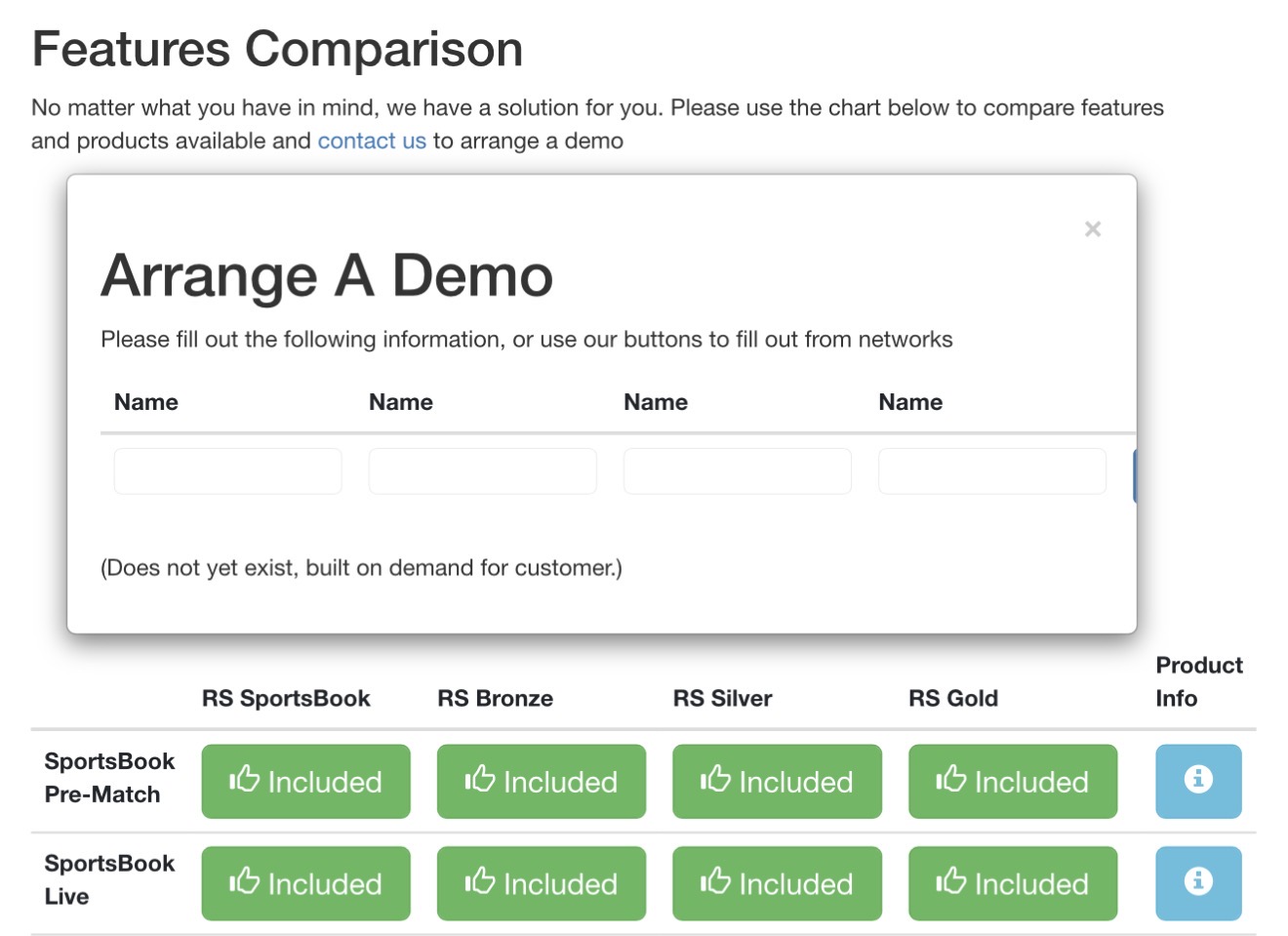
On the dialog, it says “does not yet exist” – that’s a big lesson, right? Next time – didn’t matter if it was a quick demo or less – I learned to add more polish – take that few extra minutes to really sell it.
To be fair, I wish now that AI and cursor was a thing back then, it would have been snazzier!
Screenshot
If you’re interested, here’s a ZIP of the demo so you can admire the truly questionable CSS for yourself:
Over the years I’ve registered various domains for random ideas and experiments. Some went nowhere. Most were cheap. All were forgettable.
pstars-test.info – at the time it seemed like a good idea for our table fussball league at work (and .info was cheap for one year). We never used it in the end.
cpt-tech-dev.online – we created simple “A” DNS records on this to make it easier to remember internal servers. It cost about £1.99. Not exciting, but effective and no files were ever hosted or uploaded. A waste, probably!
speakeasydating.com – a friend wanted to build a speed dating site when we were single and carefree. We never got round to it. Shame really, could’ve been cool, right?
I suppose it’s best to have more of a concrete plan before registering domains, these days I’m a bit less gung-ho on that, even it is only 1.99. Maybe because I’m too busy buying shiny things, but I think I have learned from those earlier days. Only buy it if you really need it, and if you’re gonna use it right away.
Although. AirPods Max. Damn.
Anyway – that’s the full story, and perhaps a lesson or two into the bargain when doing a demo or buying domains.
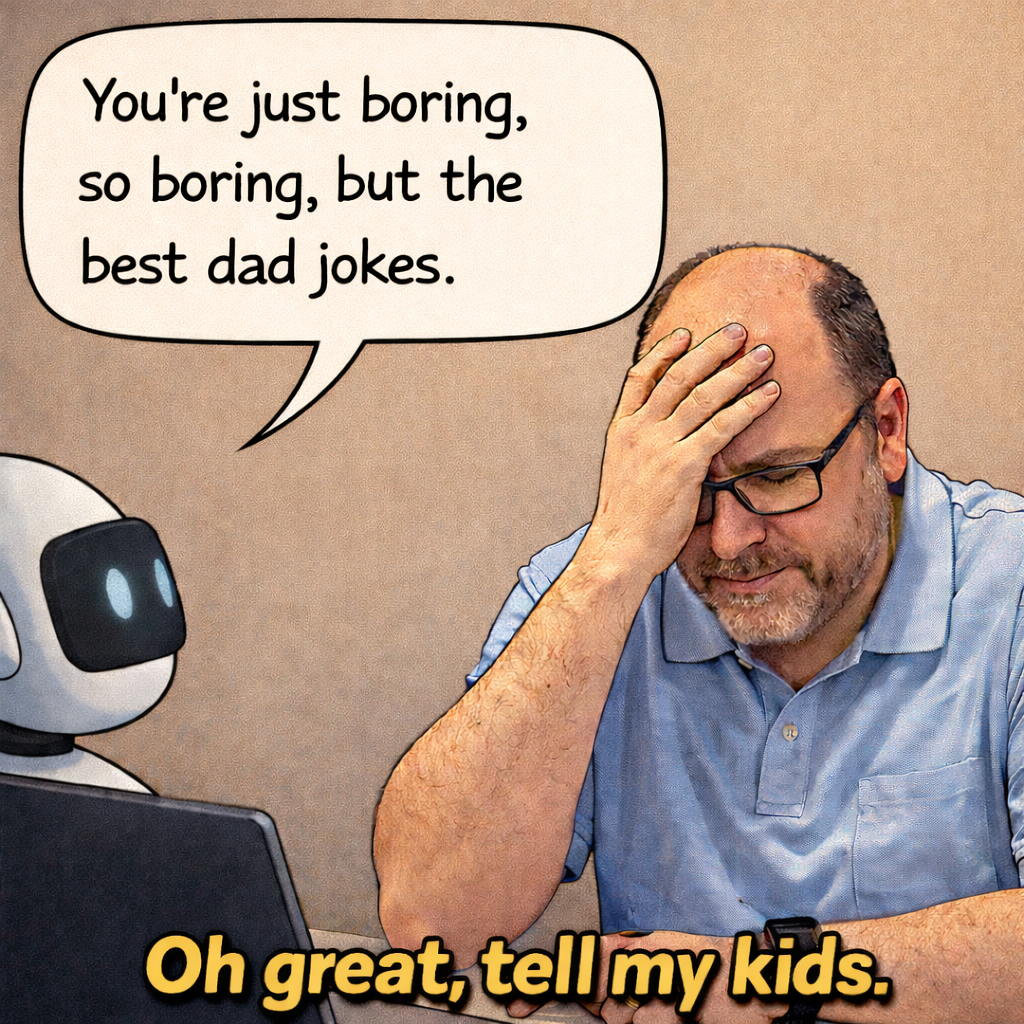
Like most sensible people in 2026, I now outsource part of my thinking to a large, polite, and slightly unsettling machine that lives in my phone.
It helps me draft emails, sanity-check arguments, stress-test decisions, and occasionally talk me out of writing things on LinkedIn that would definitely have required a follow-up apology.
So, in a moment of either courage or poor judgement, I asked it a dangerous question:
“Based on our conversations… what do you think I’m actually like?”
This is a bit like asking your GP to be honest, your lawyer to be poetic, and your mirror to stop being polite.
What came back was… uncomfortably accurate.
Here’s the human translation.
Apparently, I’m “Systems-First” (Which Is a Polite Way of Saying “Boring”)
One of the first things it called out is that I don’t really believe in vibes-based engineering.
I don’t get excited by:
Demo theatre
Slideware architecture
“AI, but with more AI”
I do get excited by:
Things that survive contact with production
Clear ownership at 3am
Boring systems that keep regulators, boards, and sleep schedules happy
If you tell me something is “strategic,” my reflex is to ask:
“Great. Who runs it? How does it fail? How do we know it’s broken? And how much does it cost when it does?”
Which is not how you win friends at innovation workshops, but it is how you avoid explaining outages to a board.
The AI’s verdict: I optimise for operational truth over narrative comfort.
Honestly, that should probably be on my business card.
I Apparently Care a Lot About How Things Land (Not Just What They Say)
This one stung a bit, because it’s true.
I spend a lot of time thinking about:
How a CEO will read something
How legal will read it
How engineers will read it
How LinkedIn will absolutely, definitely read it in the worst possible way
If you’ve ever seen me iterate a “simple” message five times, this is why.
It’s not indecision. It’s blast-radius management.
Words have consequences in regulated, political, or high-stakes environments. I’ve learned (sometimes the hard way) that being technically right and being organisationally effective are not the same thing.
The AI described me as a “high-context communicator.”
I prefer my own term: professionally paranoid.
Leadership, Apparently: I’m a “Stabiliser”
This bit was actually reassuring.
The machine reckons my default leadership mode is:
Clarify ownership
Define boundaries
Put governance where chaos wants to live
Make escalation paths boring and predictable
Replace heroics with systems
Which, in human terms, means I’m the person who turns up after things have been on fire and says:
“Right. Let’s make sure this never requires a hero again.”
I care deeply about:
Decision rights
RACI
L1/L2/L3 models
Runbooks
“No surprises” cultures
Not because I love process (I don’t), but because process is cheaper than panic.
If you’ve worked in regulated or high-consequence tech, you’ll know exactly why this matters.
My Risk Profile Is… Weirdly Split
This was one of the more interesting bits.
On systems and operations, I’m conservative:
Guardrails
Gates
Controls
Evidence
Auditability
“Prove it works before we bet the company on it”
On truth and narrative, I’m much less conservative:
I’ll challenge stories I think are wrong
I’ll push back on things that don’t survive scrutiny
I’m willing to absorb some political discomfort if the alternative is organisational self-deception
In other words:
I hate operational risk
I tolerate personal risk
I really dislike lying to ourselves
Which probably explains most of my career, in hindsight.
What I Do Under Stress (Spoiler: I Make More Lists)
According to my AI-powered psychological ambush, when pressure goes up, I tend to:
Add more structure
Break problems into phases
Build frameworks
Stress-test narratives
Rewrite important messages until they either land safely or I lose the will to live
This is, apparently, my coping mechanism: turn ambiguity into diagrams.
There are worse habits.
The downside is that you can over-polish, over-analyse, or try to engineer uncertainty out of human systems (which is, frankly, optimistic).
The upside is that you usually don’t wake up to surprises you could have designed out.
How This Apparently Comes Across
This was the bit I was most curious about.
To boards and CEOs:
“Safe pair of hands. Sees around corners. Not a hype merchant.”
To engineers:
“Protects us from chaos. Clear about ownership. Understands production reality.”
To recruiters and peers:
“Operational CTO. Platform stabiliser. Good in regulated or high-blast-radius environments.”
Also, occasionally:
“Possibly over-indexed on risk and process.”
Which is fair. I’ve seen what happens when you under-index on those things.
The Uncomfortable Summary
The AI boiled me down to something like this:
A systems-oriented, governance-minded, pragmatically stubborn technology leader who prefers boring reliability to exciting failure, and is willing to be unpopular to avoid organisational self-deception.
I’d probably phrase it more simply:
I like tech that works.
I like organisations that know who owns what.
I like fewer surprises.
And I really don’t like pretending.
Should You Ask Your AI What It Thinks of You?
Only if you’re in the mood for a slightly unsettling mirror that:
Doesn’t laugh at your jokes
Remembers everything
And has absolutely no incentive to protect your ego
On the plus side, it’s cheaper than therapy and less likely to prescribe running.
On the downside, it’s annoyingly good at pattern recognition.
Still, I’d recommend it.
Worst case, you learn something.
Best case, you get a blog post out of it.
And if nothing else, it confirms what I’ve suspected for years:
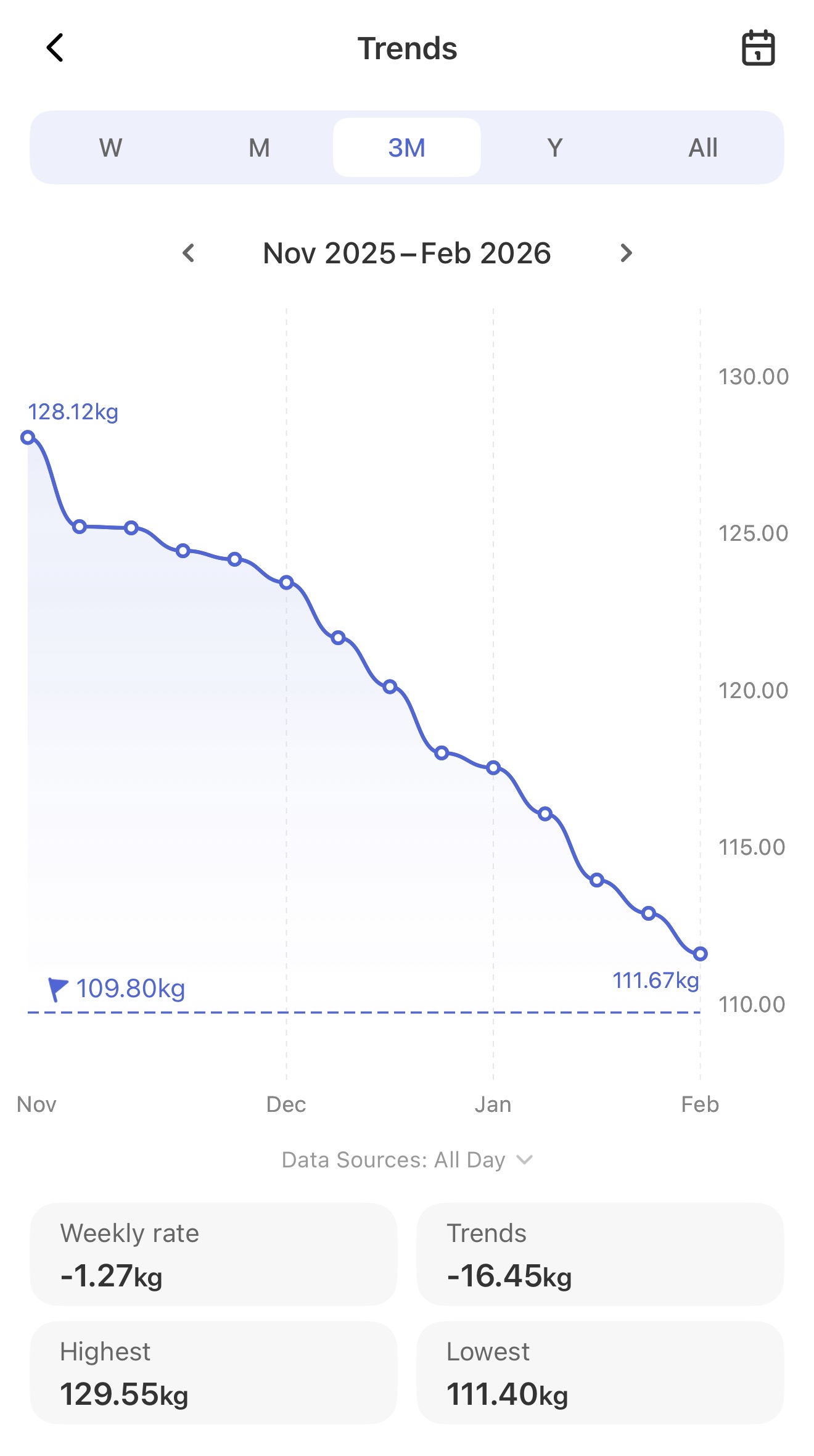
Five months ago, I stepped on the scales and saw a number I’d been expertly pretending didn’t exist: 135kg.
Screenshot
Today, I’m around 112kg. The graph is deeply satisfying in a very nerdy way. It’s just a calm, sensible line trending steadily downwards, to the tune of a bit over 22kg gone in about three or four months.
No drama, no cliff edges, just quiet, consistent progress.
Which, as it turns out, is the good kind.
Yes, I’m on Mounjaro. And yes, it’s been a big part of this. But the biggest surprise hasn’t been the number on the scale. It’s how weirdly… peaceful food has become.
Let’s get the obvious bit out of the way first. Side effects. I’ve been lucky. A bit of nausea here and there, mostly early on, but nothing that’s stopped me living my life or made me regret the decision. When you read some of the stories online, I’m very aware I’ve had a comparatively easy run of it.
The real change has been in my day-to-day behaviour, and more importantly, in my head.
Crisps and random snacking have mostly just… faded out of my life. Fizzy drinks are gone entirely, not because I’m being virtuous, but because I genuinely don’t fancy them anymore. Lunch is often either very light or doesn’t happen at all, simply because I’m not hungry. And as a bonus feature I didn’t order but very much appreciate, the reflux I used to suffer from has improved massively, which I’ll happily blame on eating like a vaguely sensible adult for once.
The strangest part is how quiet food has become. It used to be a constant background process running in my brain. What’s next, what’s in the cupboard, what can I grab quickly. Now it feels more like a polite suggestion than a relentless notification system. I eat when I want to, not because my brain is nagging me like an overenthusiastic product manager.
There’s also a more important change that doesn’t show up on the chart.
I actually feel good about myself again.
Not in a “cue inspirational music and slow-motion jogging” way. More in a calm, slightly surprised, “oh… this is working” way. I’ve still got about 12kg to go before I’m out of the “officially obese” category, which feels like a pretty decent milestone. I’m not done, I’m not claiming victory, and I’m definitely not buying skinny jeans. But for the first time in a long time, this feels achievable rather than theoretical.
And no, before you ask, I’m still not going to the beach. I don’t want to risk them trying to float me back out to sea and fitting me with a tracker. Let’s not tempt fate.
I do want to be very clear about one thing though. I know I’m one of the lucky ones. Not everyone tolerates these meds well. Not everyone gets results like this. Not everyone can access them at all. This isn’t a miracle cure story or a sales pitch. It’s just an honest update from someone who’s finally found something that’s shifted both the numbers and the mindset.
What Mounjaro has really given me isn’t just a smaller appetite. It’s taken away the constant fight with food, made better choices feel easier, turned down the mental noise, and helped me feel more like myself again.
The scale is nice. The graph is very satisfying. But the real win is that food no longer runs the meeting.
I’m not finished yet. But for the first time in years, I’m pretty confident I’m actually going to get there