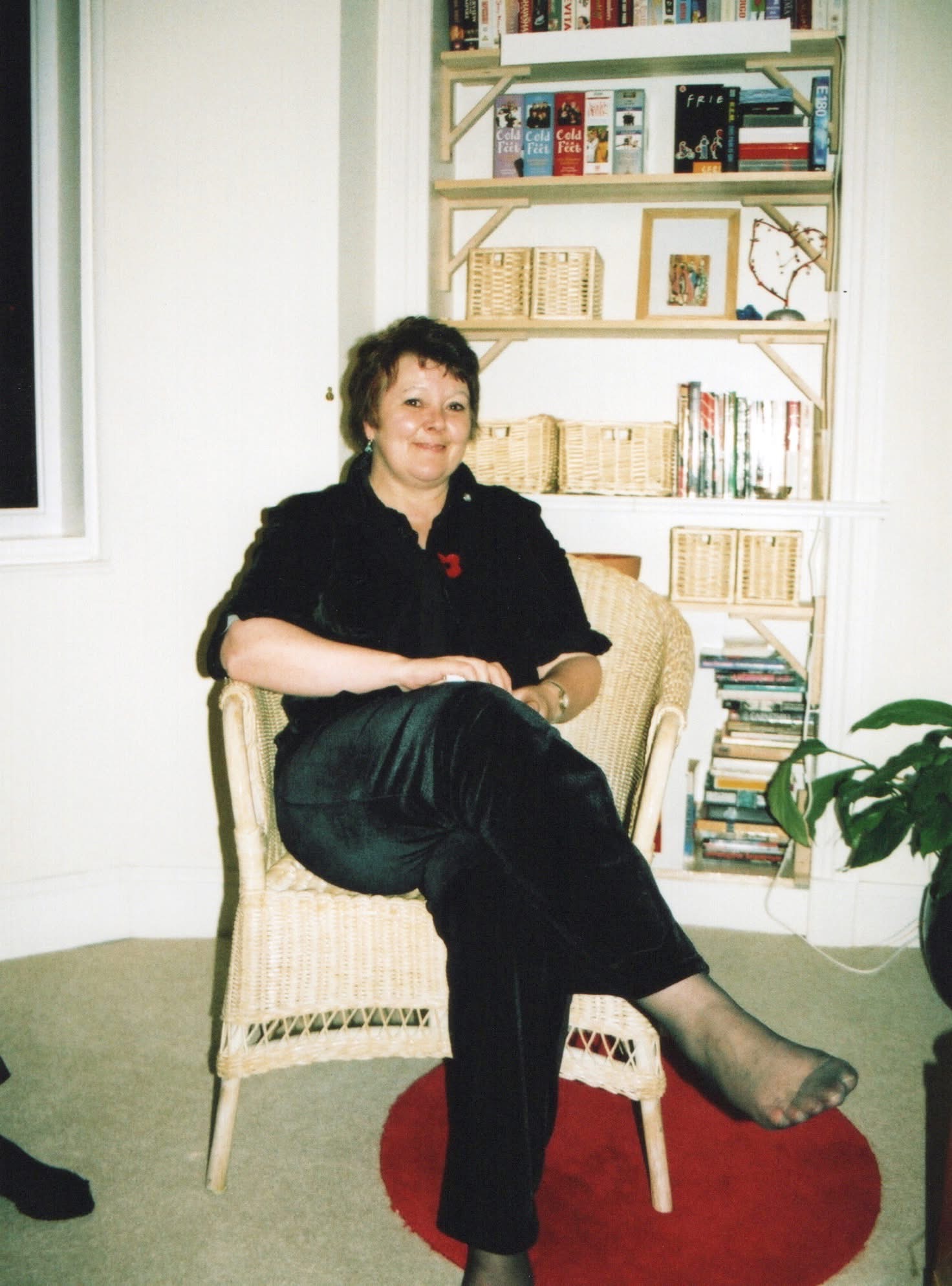
When people ask me where my leadership style came from, I suspect they are expecting an answer involving engineering.
Perhaps a manager I admired.
A particularly good CTO.
A leadership course.
Thirty years of experience building software.
Maybe even one of those books with an eagle, a mountain or a lone climber standing triumphantly at the top of something.
The truth is rather less glamorous.
Most of it came from a theatre in deepest Lanarkshire.
My mum managed it for more than twenty-five years. It was a proper community theatre, just outside Glasgow, where there were amateur dramatics both on the stage and, if we are being completely honest, a fair amount of amateur dramatics off it as well.
Looking back, I sometimes think the performances in the foyer before curtain-up could have given whatever was happening under the lights a decent run for its money.
Everybody had an opinion. Somebody had fallen out with somebody else. Something important had mysteriously disappeared five minutes before the audience arrived. A volunteer would announce they were never coming back. An actor would suddenly decide they had forgotten every line they had ever learned.
And somehow, in the middle of all that perfectly ordinary chaos, my mum would quietly restore order.
Not by making herself the loudest person in the room.
Not by reminding everyone she was the manager.
Simply by understanding people.
As a child I thought she wandered around drinking tea, carrying clipboards and chatting to actors.
As an adult, after three decades leading technology teams, I realised she had been doing something altogether more difficult.
She was solving people-shaped problems.
The older I get, the more convinced I become that almost every leadership challenge is exactly that.
Technology has an unfair reputation for being difficult.
It certainly can be.
I’ve spent enough evenings staring at log files, production incidents and architecture diagrams to know that software has an extraordinary ability to humble even the most experienced engineer.
But technology is still logical.
When something breaks there is usually a reason.
It might take hours or days to find it, but somewhere there is an explanation patiently waiting to be discovered.
People are different.
People arrive carrying worries you know nothing about.
People misunderstand each other.
People lose confidence.
People become frightened to ask questions because they worry those questions might make them appear less capable.
People quietly decide they are no longer valued long before anyone notices.
I’ve worked with enough engineering teams to know that projects rarely fail because somebody chose the wrong framework.
They fail because trust quietly disappeared while everyone was busy discussing frameworks.
That is where leadership actually lives.
One of the reasons I enjoy interviewing engineers is that I am far more interested in how someone thinks than how many technologies they can remember. Programming languages can be learned. Cloud platforms change. AI evolves almost weekly.
Curiosity is harder to teach.
Kindness is harder still.
Over the years I’ve become increasingly convinced that the best engineers are almost always the most curious ones. They ask better questions. They listen before answering. They are prepared to change their minds when new evidence appears. They don’t feel the need to win every discussion because they understand that building software is a team sport.
I don’t think I learned that from technology.
I think I watched it happening in a theatre long before I ever wrote my first line of code.
One sentence has stayed with me my entire life.
“Kindness costs nothing.”
It sounds so simple that it almost risks being ignored.
Business sometimes treats kindness as though it is the opposite of high standards. As though being kind means avoiding difficult conversations or pretending everything is fine.
My experience has been exactly the opposite.
Real kindness means caring enough to tell somebody the truth.
It means believing they deserve the opportunity to improve.
It means assuming positive intent before assuming incompetence.
It means recognising that everyone you meet is fighting battles you know absolutely nothing about.
I’ve made plenty of mistakes throughout my career, but I’ve never regretted trying to treat people with kindness.
I have occasionally regretted failing to do so.
Of course, kindness did not mean I escaped consequences growing up.
Like every Scottish mother worth her salt, mine possessed a remarkable superpower.
The look.
Every Scottish reader knows exactly the one I mean.
No shouting.
No swearing.
No dramatic speeches.
Just… the look.
It could travel the length of an entire theatre foyer.
I remain unconvinced it obeyed the normal laws of physics.
The remarkable thing was that she rarely needed to say anything afterwards because I already knew.
I was wrong.
Not because I had broken some arbitrary rule.
Because I had disappointed somebody whose opinion mattered enormously to me.
Oddly enough, I still think about that look today.
Not because I want anyone I work with to fear disappointing me.
Quite the opposite.
The best leaders I’ve known have never relied on authority.
They never needed to.
Their standards were obvious.
You wanted to do good work because you respected them.
Fear creates compliance.
Respect creates commitment.
Those are very different things.
As I’ve become older, I’ve also found myself caring less about being remembered for the systems I’ve built.
Technology has a wonderfully short memory.
Programming languages come and go.
Architectures evolve.
Platforms are replaced.
The system you are immensely proud of today will probably become somebody else’s migration programme in ten years’ time.
That isn’t depressing.
It’s simply the nature of our profession.
What survives is something else entirely.
People remember how you made them feel.
They remember whether you listened.
Whether you stayed calm.
Whether you gave them confidence when they had very little of their own.
Whether you made them better than they thought they could be.
Long after the software has disappeared, those memories remain.
Perhaps that is the real legacy any of us leave behind.
I don’t think my mum ever described herself as a leader.
She certainly never spoke about organisational culture, emotional intelligence or servant leadership. In fact, I suspect she would have rolled her eyes spectacularly at most modern leadership jargon before quietly getting on with solving whatever problem was in front of her.
She simply turned up.
She cared about people.
She believed kindness cost nothing.
She expected you to do the right thing, even when nobody was watching.
And if you failed to meet that standard…
Well…
There was always the look.
I don’t write this because I think my story is unique.
In fact, I suspect the opposite.
I suspect that if we all stopped for long enough to think about it, most of us would realise that the people who shaped our leadership philosophy never carried the title of leader at all.
They were parents.
Teachers.
Coaches.
Neighbours.
Friends.
Ordinary people quietly demonstrating extraordinary character without ever imagining someone was paying close enough attention to learn from them.
I’ve spent more than thirty years working in technology, but the older I become, the less interested I am in asking successful leaders what books they read or which management theories they follow.
I’m much more interested in asking a different question.
Who taught you how to lead?
Because I have a growing suspicion that the answer to that question explains far more about us than anything we’ve ever written on our CVs.
I loving memory of my mum Maggie Aitken 05.53 – 27.05.2026 – a force to be reckoned with and so loved by me, my family and her friends.